


NVIDIA Graphics Cards
NVIDIA GeForce RTX and GeForce GTX graphics cards for gamers are at the heart of a powerful gaming PC and play a crucial role in the age of 4K gaming and virtual reality, as high-resolution gaming and VR demand massive graphics performance.
264 Results


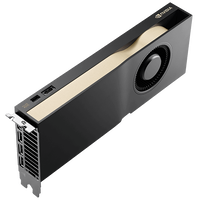


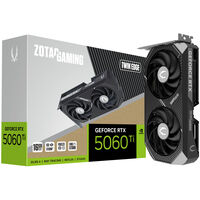


NVIDIA Graphics Cards 2025: An Overview
NVIDIA is one of the leading manufacturers of graphics cards and graphics processing units (GPUs), which are used in computers for gaming, professional applications, and data centres. Since its founding in 1993, NVIDIA has had a major influence on the graphics industry and dominates the market for dedicated graphics cards.
GeForce Series (Gaming Graphics Cards)
The GeForce series is developed specifically for gamers and offers various product lines aimed at different needs:
- GeForce RTX: These graphics cards use modern ray tracing technology for realistic lighting effects and offer AI-powered image enhancement with DLSS (Deep Learning Super Sampling). Current series are the RTX 50xx (Blackwell architecture) and RTX 40xx (Ada Lovelace architecture).
- GeForce GTX: Older models without dedicated ray tracing cores, but still powerful options for traditional gaming.
Ray Tracing and DLSS
NVIDIA introduced real-time ray tracing technology with its RTX cards. This technology simulates light rays to create realistic reflections, shadows, and lighting, which greatly improves the visual experience. DLSS increases the frame rate through AI-powered upscaling without compromising image quality.
NVIDIA Architectures: Blackwell and Ada Lovelace
- Ada Lovelace Architecture (RTX 40xx Series): Delivers improvements in ray tracing efficiency, optimised DLSS technology, and increased GPU performance for higher frame rates and resolutions.
- Blackwell Architecture (RTX 50xx Series): The latest generation with advanced ray tracing cores, sophisticated AI acceleration, and optimised energy efficiency for maximum performance.
NVIDIA Studio and Creator Cards
In addition to gaming graphics cards, NVIDIA offers specialised GPUs for creators. NVIDIA Studio certification ensures that these graphics cards are optimised for professional workflows in areas such as video editing, 3D rendering, and AI-powered content.
Professional GPUs: RTX Ada and Hopper
- NVIDIA RTX Series for Professionals: Formerly known under the Quadro brand, these GPUs offer high precision and stability for CAD, 3D modelling, and scientific computing.
- NVIDIA Hopper and Blackwell: These GPUs are designed for data centres, AI training, and high-performance computing applications.
CUDA and GPU Computing
With CUDA technology, NVIDIA has developed a platform that enables developers to use the parallel computing power of GPUs. This accelerates not only graphics applications, but also scientific computing and AI applications.
NVIDIA Reflex and G-SYNC
- NVIDIA Reflex: A technology that reduces system latency in competitive games by optimising the graphics pipeline. With the introduction of Reflex 2 and Frame Warp technology, latency has been reduced even further, resulting in faster reactions and improved aiming accuracy.
- G-SYNC: Synchronises the monitor's refresh rate with the graphics card's output to prevent tearing and stuttering. Modern G-SYNC displays also support the NVIDIA Reflex Latency Analyzer, which measures system latency and helps gamers optimise their system settings.
NVIDIA RTX for Workstations and Data Science
NVIDIA RTX technology is used in workstations for research, simulation, and machine learning. With the growing demand for AI solutions and data science applications, NVIDIA has expanded its presence in these areas. RTX-based workstations combine the performance of NVIDIA RTX and NVIDIA Quadro RTX GPUs with acceleration through RAPIDS to shorten training times and provide a fast path to data analysis.
Partnerships and Ecosystem
NVIDIA works closely with game developers, software companies, and hardware manufacturers to ensure that its GPUs are optimally supported. Technologies such as NVIDIA GameWorks provide developers with tools to integrate impressive visual effects into games. NVIDIA has also formed partnerships with leading cloud providers such as Amazon Web Services (AWS) and Microsoft Azure to promote the integration of AI and supercomputing technologies.
Which NVIDIA Graphics Card Is the Best?
The NVIDIA GeForce RTX 5000 graphics cards "Blackwell" introduced in 2024 are currently NVIDIA's most powerful graphics cards. The GeForce RTX 5090 and GeForce RTX 5080 offer enormous performance for 4K gaming at high FPS and are aimed at enthusiasts who want to enjoy the latest games in impressive quality at maximum graphics settings with ray tracing and DLSS 4. With the RTX 5070 Ti and RTX 5070, NVIDIA expands the Blackwell portfolio with powerful cards for UWQHD (3,840 x 1,440) and WQHD (2,560 x 1,440).
NVIDIA DLSS 4.0 for RTX 5000 Graphics Cards
Newly introduced with the RTX 5090, DLSS 4.0 delivers an even greater increase in FPS and improved image quality. NVIDIA DLSS uses artificial intelligence and advanced Tensor Cores on GeForce RTX graphics processors to increase the frame rate while delivering razor-sharp, high-resolution images. The latest version offers optimised Frame Generation and more efficient upscaling technologies for an even smoother gaming experience.
Gaming PCs with NVIDIA GeForce Graphics Cards at Caseking
In addition to NVIDIA graphics cards as PC components, we also offer complete gaming PCs equipped with GeForce GPUs. Discover our NVIDIA GeForce Gaming PCs.
NVIDIA GeForce Graphics Card Generations at a Glance
Do you want to know how the individual GeForce generations differ and need a quick overview of the GPU technology of the latest and older generations? Here you can find out which advantages the latest NVIDIA graphics cards offer you.
| RTX 50 Series | RTX 40 Series | RTX 30 Series | RTX 20 Series | GTX 16 Series | GTX 10 Series | GTX 900 Series | ||
|---|---|---|---|---|---|---|---|---|
| NVIDIA Architecture | Name of Architecture | Blackwell | Ada Lovelace | Ampere | Turing | Turing | Pascal | Maxwell |
| Streaming Multiprocessors | 2 × FP32 | 2 × FP32 | 2 × FP32 | 1 × FP32 | 1 × FP32 | 1 × FP32 | 1 × FP32 | |
| Ray Tracing Cores | 4th Generation | 3rd Generation | 2nd Generation | 1st Generation | ❌ | ❌ | ❌ | |
| Tensor Cores (AI) | 5th Generation | 4th Generation | 3rd Generation | 2nd Generation | ❌ | ❌ | ❌ | |
| NVIDIA DLSS | 4 | 3 | 2 | 2 | ❌ | ❌ | ❌ | |
| Platform | NVIDIA Reflex | ✅ | ✅ | ✅ | ✅ | ✅ | ✅ | ✅ |
| NVIDIA Broadcast | ✅ | ✅ | ✅ | ✅ | - | - | - | |
| NVIDIA App | ✅ | ✅ | ✅ | ✅ | ✅ | ✅ | ✅ | |
| Game Ready Driver | ✅ | ✅ | ✅ | ✅ | ✅ | ✅ | ✅ | |
| NVIDIA Studio Driver | ✅ | ✅ | ✅ | ✅ | ✅ | ✅ | ❌ | |
| NVIDIA ShadowPlay | ✅ | ✅ | ✅ | ✅ | ✅ | ✅ | ✅ | |
| NVIDIA Highlights | ✅ | ✅ | ✅ | ✅ | ✅ | ✅ | ✅ | |
| NVIDIA Ansel | ✅ | ✅ | ✅ | ✅ | ✅ | ✅ | ✅ | |
| NVIDIA Freestyle | ✅ | ✅ | ✅ | ✅ | ✅ | ✅ | ✅ | |
| VR Ready | ✅ | ✅ | ✅ | ✅ | GTX 1650 Super or higher | GTX 1060 or higher | GTX 970 or higher | |
| NVIDIA Omniverse | ✅ | ✅ | ✅ | ✅ | ❌ | ❌ | ❌ | |
| Additional Features | PCIe | 5.0 | 4.0 | 4.0 | 3.0 | 3.0 | 3.0 | 3.0 |
| NVIDIA Encoder (NVENC) | Gen 9 | Gen 8 | Gen 7 | Gen 7 | Gen 6 | Gen 6 | Gen 5 | |
| NVIDIA Decoder (NVDEC) | Gen 6 | Gen 5 | Gen 5 | Gen 4 | Gen 4 | Gen 3 | Gen 2 | |
| AV1 Encoding | ✅ | ✅ | ❌ | ❌ | ❌ | ❌ | ❌ | |
| AV1 Decoding | ✅ | ✅ | ✅ | ❌ | ❌ | ❌ | ❌ | |
| CUDA Capability | 12.8 | 8.9 | 8.6 | 7.5 | 7.5 | 6.1 | 5.2 | |
| DX12 Ultimate | ✅ | ✅ | ✅ | ✅ | ❌ | ❌ | ❌ | |
| PhysX Support | ❌ 32-bit ✅ 64-bit |
✅ 32-bit ✅ 64-bit |
✅ 32-bit ✅ 64-bit |
✅ 32-bit ✅ 64-bit |
✅ 32-bit ✅ 64-bit |
✅ 32-bit ✅ 64-bit |
✅ 32-bit ✅ 64-bit |
|
| Video Outputs | HDMI 2.1b, DisplayPort 2.1b | HDMI 2.1, DisplayPort 1.4a | HDMI 2.1, DisplayPort 1.4a | HDMI 2.0b, DisplayPort 1.4a | HDMI 2.0b, DisplayPort 1.4a | HDMI 2.0b, DisplayPort 1.4a | HDMI 2.0, DisplayPort 1.2 | |